Start with the feeling you want to remember
Your engagement outfits should let you enjoy each other. You might picture a dramatic dress on estate steps, tailored suits downtown, or jeans and boots on a mountain trail. All of those can belong in a thoughtful engagement gallery. The starting point is your personality, the setting, and what you want to do together.
At Square Atom, I look at clothing as part of the photograph: its shape, texture, color, and movement. A beautiful outfit earns its place when you can also walk, sit, hug, and laugh in it. You do not need a new wardrobe or a particular body type to make compelling portraits.
This guide combines practical research with real examples from our portfolio: Toronto tailoring, Sam & Jas’s Ontario celebration, Kiera & Gill in Pensacola, Carson & Camryn in New Orleans, a waterfall proposal, and Noopur & Divyakshi at Hills & Dales. Each example explains a different wardrobe decision. The palettes are creative suggestions, not rules about which colors people are allowed to wear.
- Choose a mood and location before shopping.
- Lay both complete outfits together, including shoes.
- Try everything on while sitting, walking, and embracing.
- Confirm time and privacy for a change before packing a second look.
Build a small mood board with a clear purpose
Choose three words for the session: perhaps romantic, architectural, and playful; or coastal, relaxed, and luminous. Then gather six to eight references: two for clothing, two for the setting, and two for the connection or movement you love. Add a detail or color reference if it helps. A focused board is easier to use than fifty unrelated poses.
Notice what attracts you in each picture. Is it a flowing silhouette, warm stone, a close embrace, or the contrast between a pale suit and dark foliage? Write that down. We can use the idea without copying another couple’s photograph.
Build around one piece you already love. Try a favorite suit, a meaningful accessory, a statement dress, or a culturally significant outfit. Decide how the second outfit supports its mood. Either partner can wear tailoring, a dress, a jumpsuit, or something more casual; matching the level of formality matters more than following a gendered formula.
Five mood and color directions to make your own
Use these combinations as starting points. Color names describe a mood rather than an exact shopping requirement. A small accent in a scarf, jacket lining, earrings, or shoes can connect the two outfits without making them identical.
| Mood and setting | Suggested palette | Outfit direction | Practical consideration |
|---|---|---|---|
| Estate editorial | Ivory · burgundy · charcoal · muted gold | A sculptural dress or jumpsuit with a light blazer or dark tailoring. | Bring walking shoes for gardens and stone steps. |
| Garden romance | Sage · rose · cream · warm brown | A soft floral or textured piece paired with a quieter solid. | Check whether long hems will trail on damp paths. |
| Downtown after dark | Black · ivory · deep blue · silver | Clean tailoring, a slip dress or structured separates, and one distinctive accessory. | Include a coat you are happy to photograph. |
| Coastal ease | Sand · pale blue · ivory · terracotta | An airy dress, relaxed trousers, or a lightweight shirt with room to move. | Test fabric in wind and bright light; plan shoes for the route. |
| Mountain or waterfall | Rust · forest · cream · denim blue | Comfortable layers for the approach, with an optional portrait outfit carried separately. | Prioritize traction and warmth over the mood board. |
Toronto: cream tailoring and a vintage mood
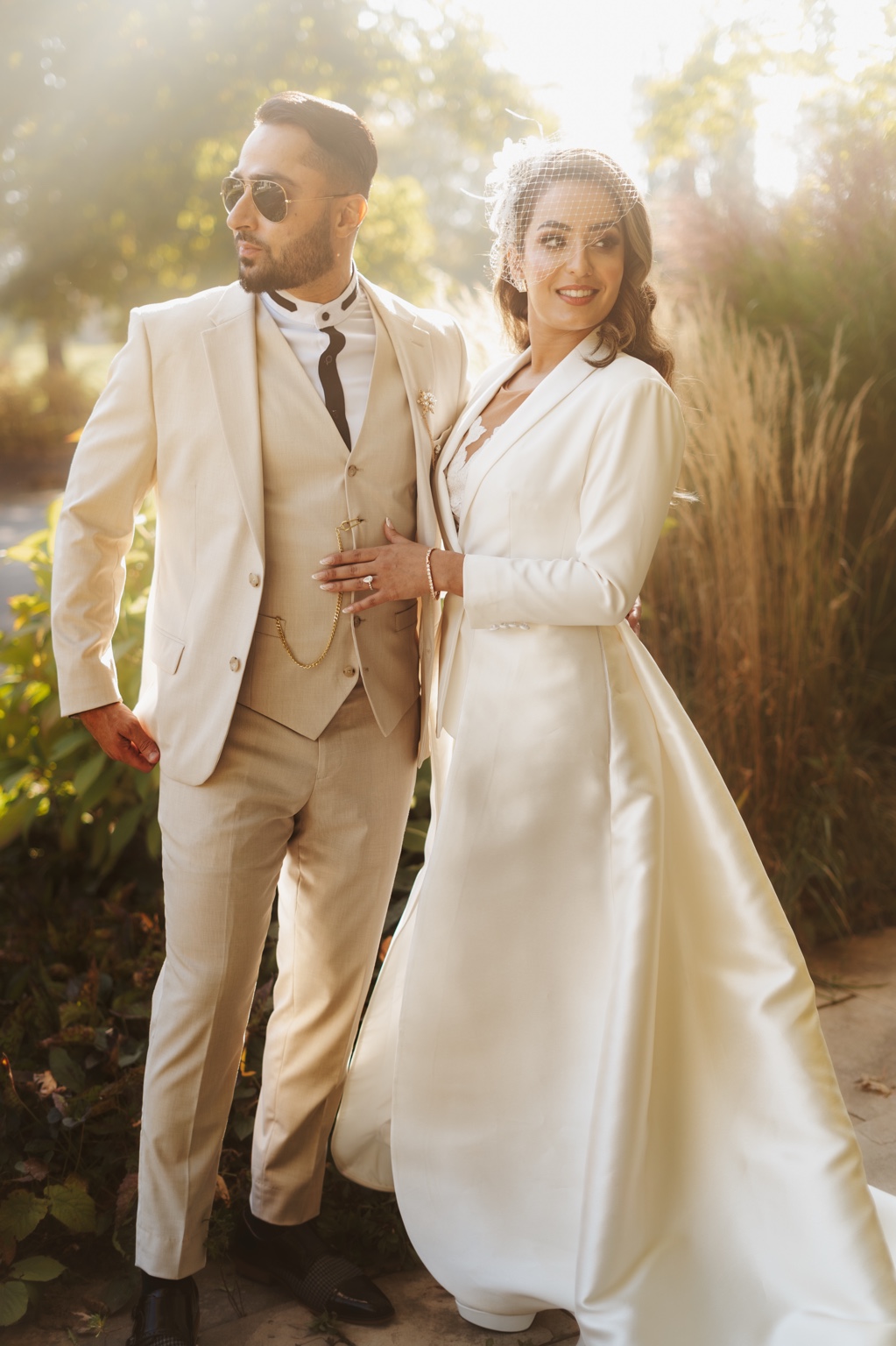
The Toronto engagement portrait in our portfolio pairs cream tailoring with a long ivory skirt, a birdcage veil, and warm backlight. The two outfits share a color family, but their shapes and details give each person a distinct presence. A waistcoat, dark shirt detail, and jewelry keep the pale palette from feeling flat.
Try this direction if you love a polished, cinematic look: build around ivory, cream, champagne, and one darker accent. Check the garments together in daylight, since two whites can have very different undertones. A veil or other expressive accessory is optional; choose it because it feels like you, rather than because an engagement picture needs to look bridal.
Sam & Jas: a short ivory dress and dark checked tailoring
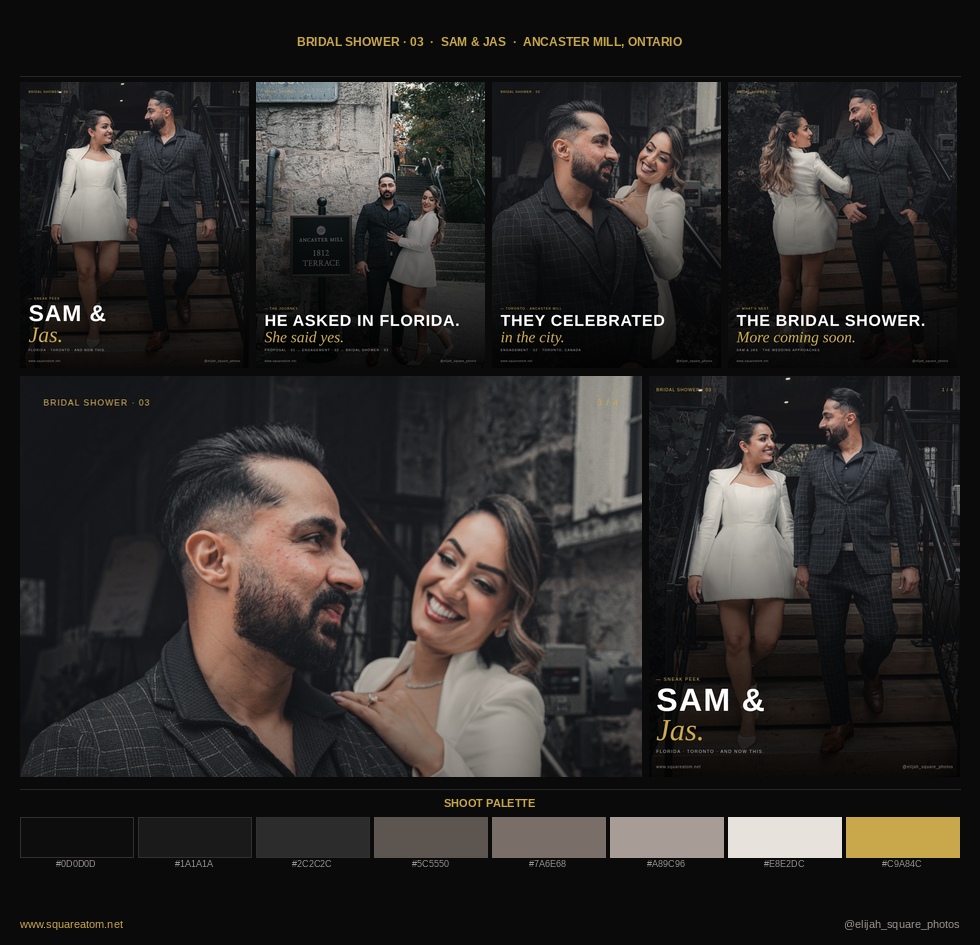
Sam & Jas’s Ancaster Mill portfolio collection is labeled as their Ontario bridal shower. It is included here as wardrobe inspiration from another part of their celebration, rather than presented as an engagement session. The short ivory dress and dark checked suit create a clear light–dark contrast against the stone and ironwork.
The useful lesson is proportion: a shorter structured dress can feel just as intentional as a floor-length gown. The suit carries the pattern while the dress gives the eye a quieter area. Our existing contact sheet below also shows how one coordinated look carries through walking portraits, close photographs, and wider environmental frames. For your own engagement session, borrow the balance and choose the hem length and tailoring that let you move comfortably.
Kiera & Gill in Pensacola: relaxed white with a coastal accent
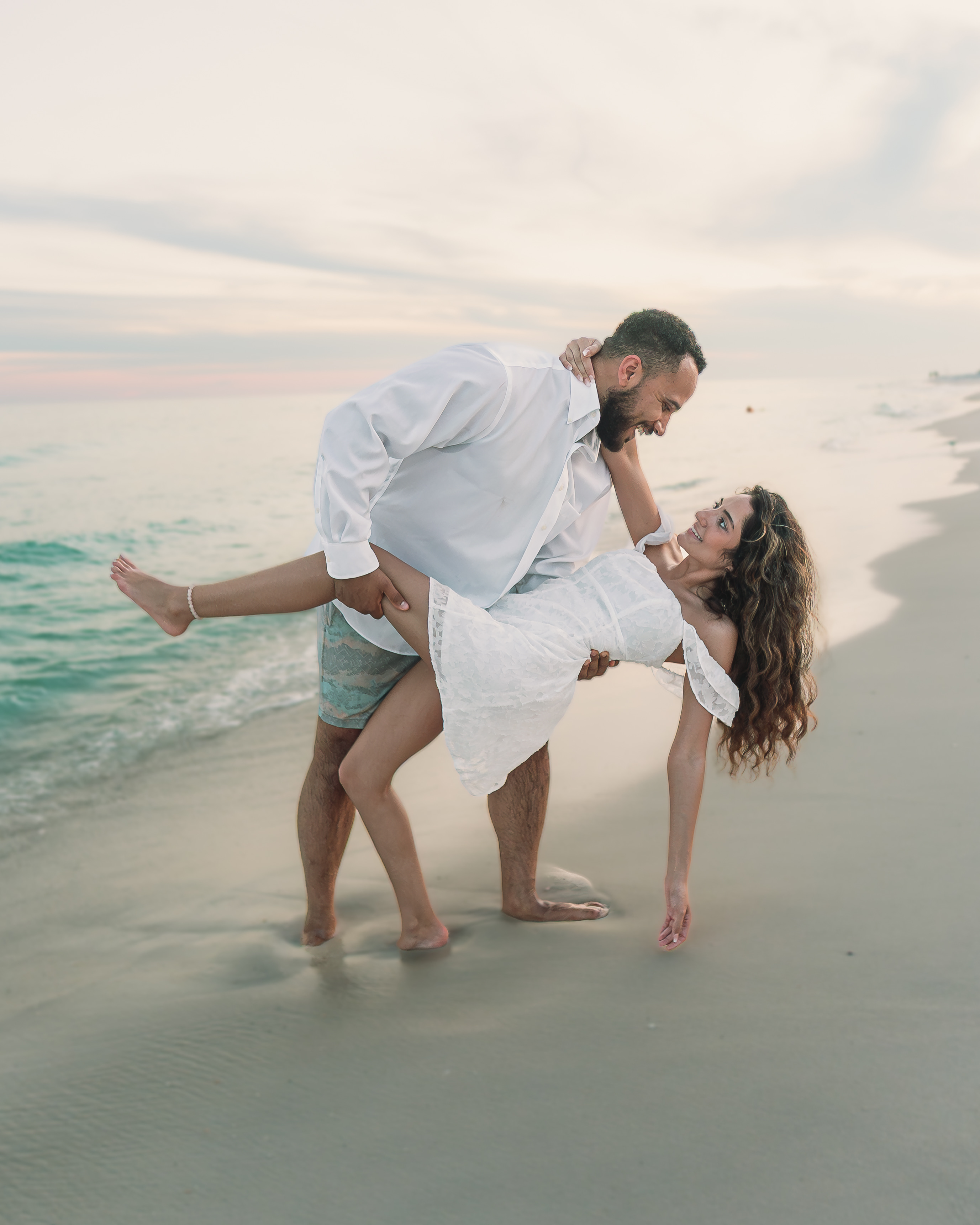
Kiera & Gill’s Pensacola engagement photographs bring the formality down while keeping the outfits connected. A white dress and relaxed white shirt create a shared base; the pale aqua patterned shorts echo the water. Bare feet suit this particular shoreline photograph, and the clothing leaves room for a playful dip.
This is a different kind of white-on-white from the Toronto tailoring. The silhouette, texture, setting, and relaxed styling change the mood. If this feels like your relationship, try an easy dress or separates with a lightweight shirt and one soft coastal accent. Decide in advance whether you are comfortable getting clothing wet or sandy, and bring suitable footwear for the route to the beach.
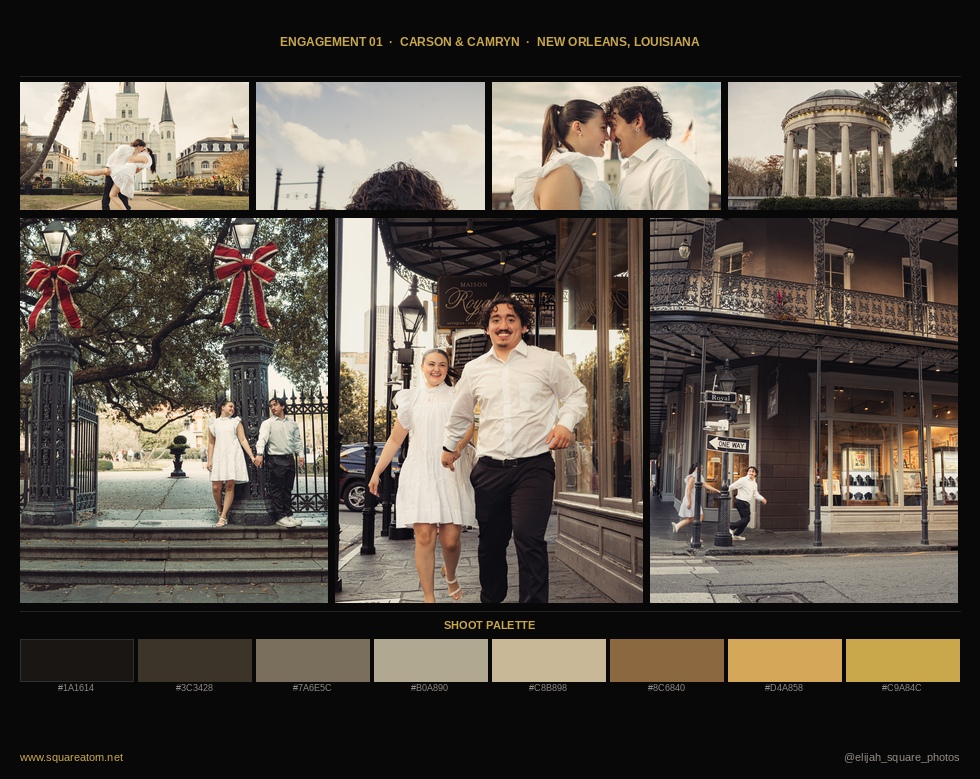
Carson & Camryn in New Orleans: simple clothing, expressive surroundings
Carson & Camryn’s New Orleans engagement contact sheet pairs a white dress with a white shirt and dark trousers. The clothing stays visually consistent while gates, balconies, streets, and warm architectural details change around them. The palette comes from the whole photograph, not just what the couple is wearing.
Use this approach when the location has plenty of detail. You can keep your outfits simple and let the city bring texture and atmosphere. Plan shoes for the actual walk between locations, and test whether your outfit works when you sit or take a longer stride. The contact sheet shows why a second outfit is optional: a change of background and movement already creates variety.
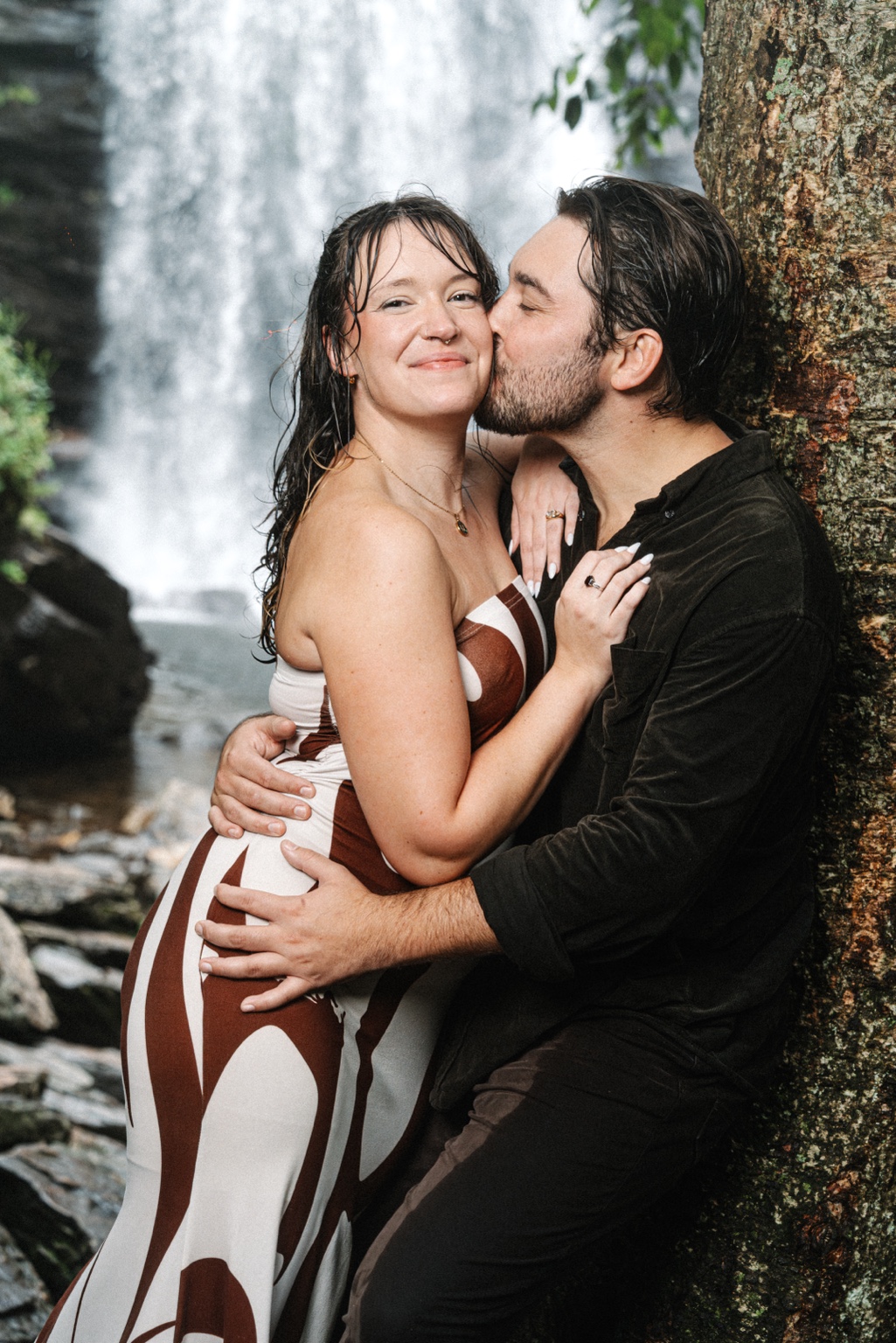
A waterfall portrait: a bold print beside a quiet solid
This waterfall portrait from our proposal portfolio pairs a large rust-and-ivory print with a dark solid shirt. The print is bold, but its broad shapes read differently from tiny repetitive checks. Warm clothing tones also bring contrast to the cool water and green surroundings.
The visible wet hair and clothing are part of this particular moment, not a requirement for an adventurous session. Take the styling idea—one expressive print beside a simpler piece—and adapt it to the forecast, access, and your comfort. Carry practical layers and shoes for the approach. A beautiful portrait outfit is not a substitute for clothing suited to the route.
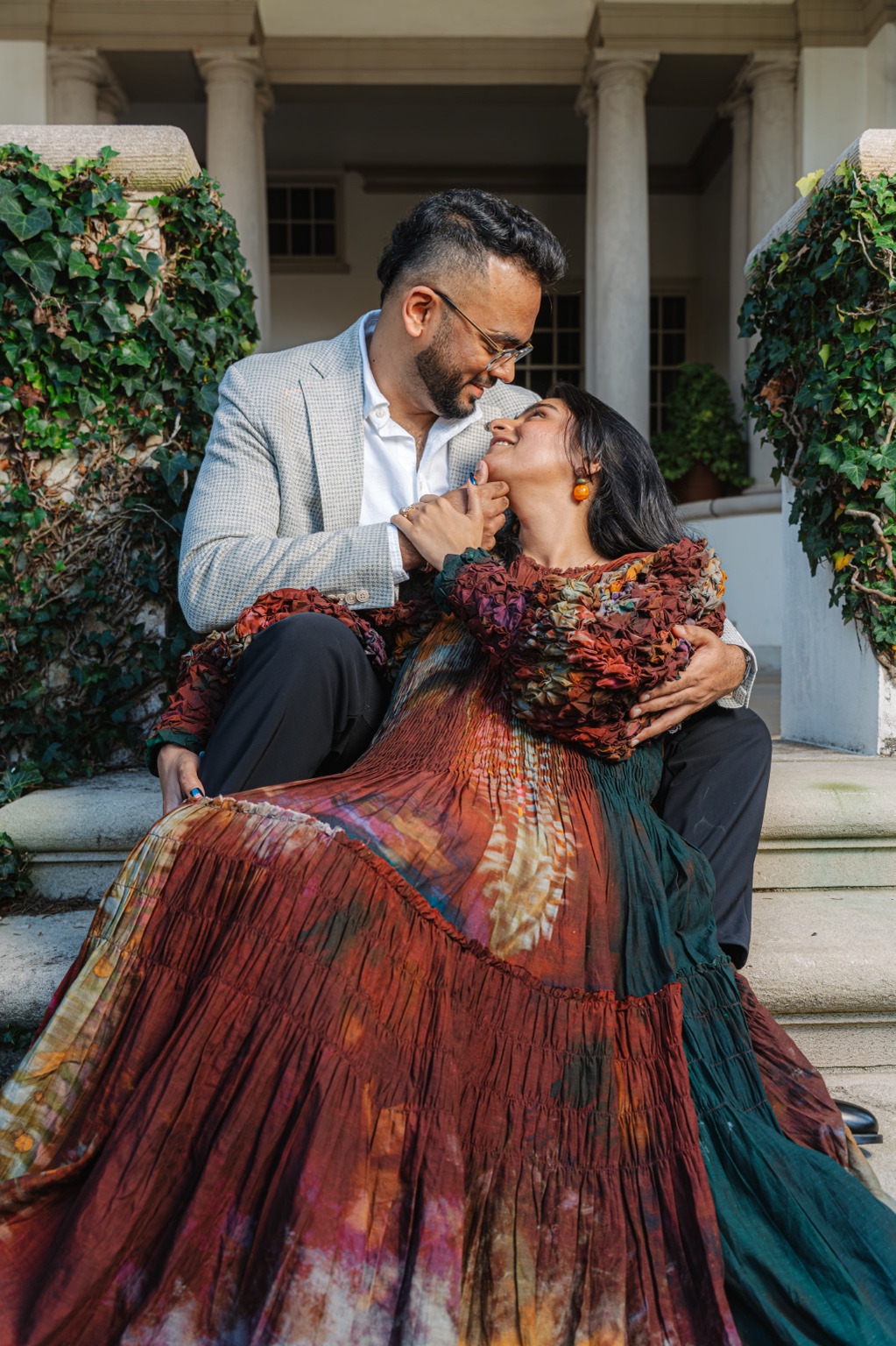
Real example: bold color at Hills & Dales
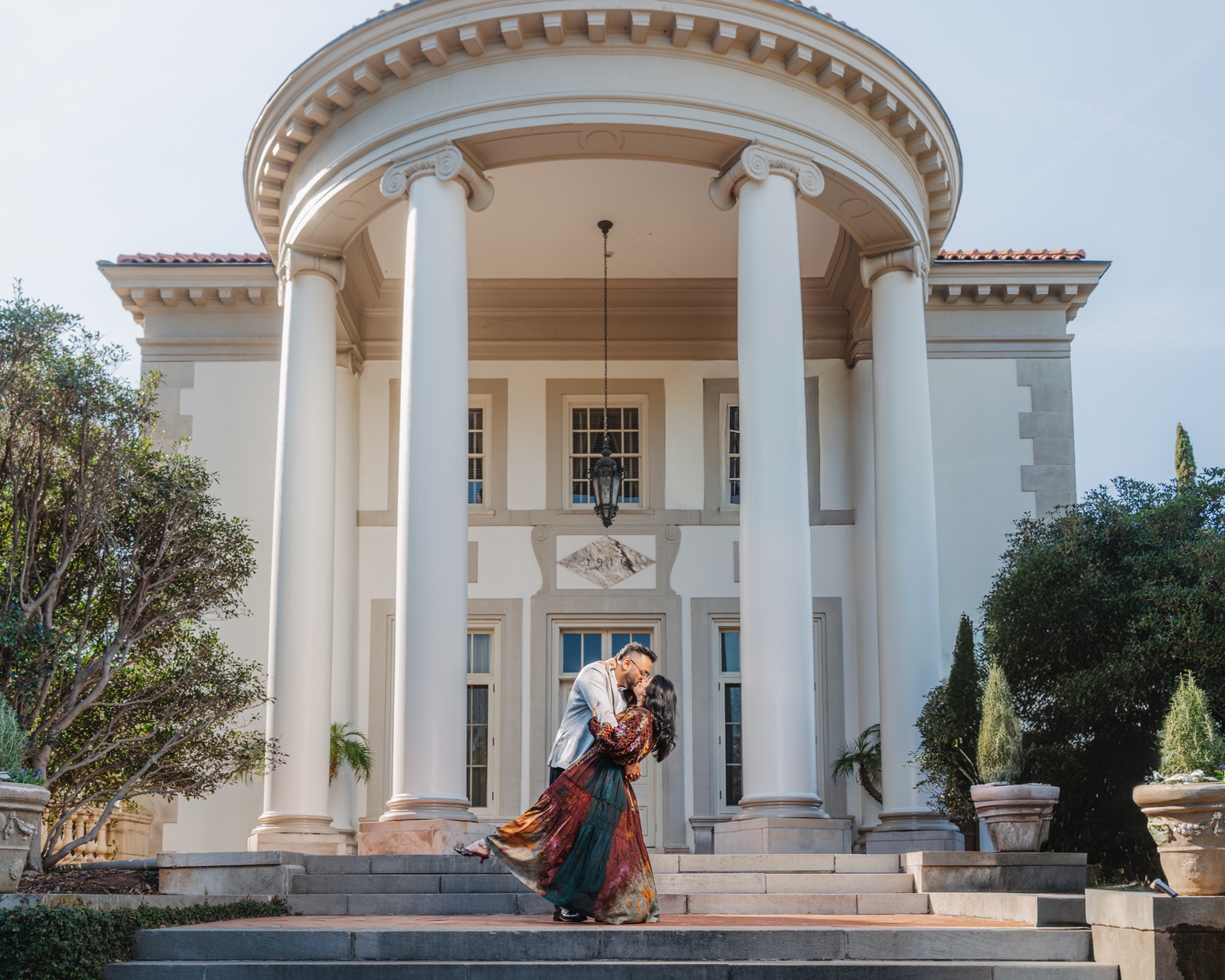
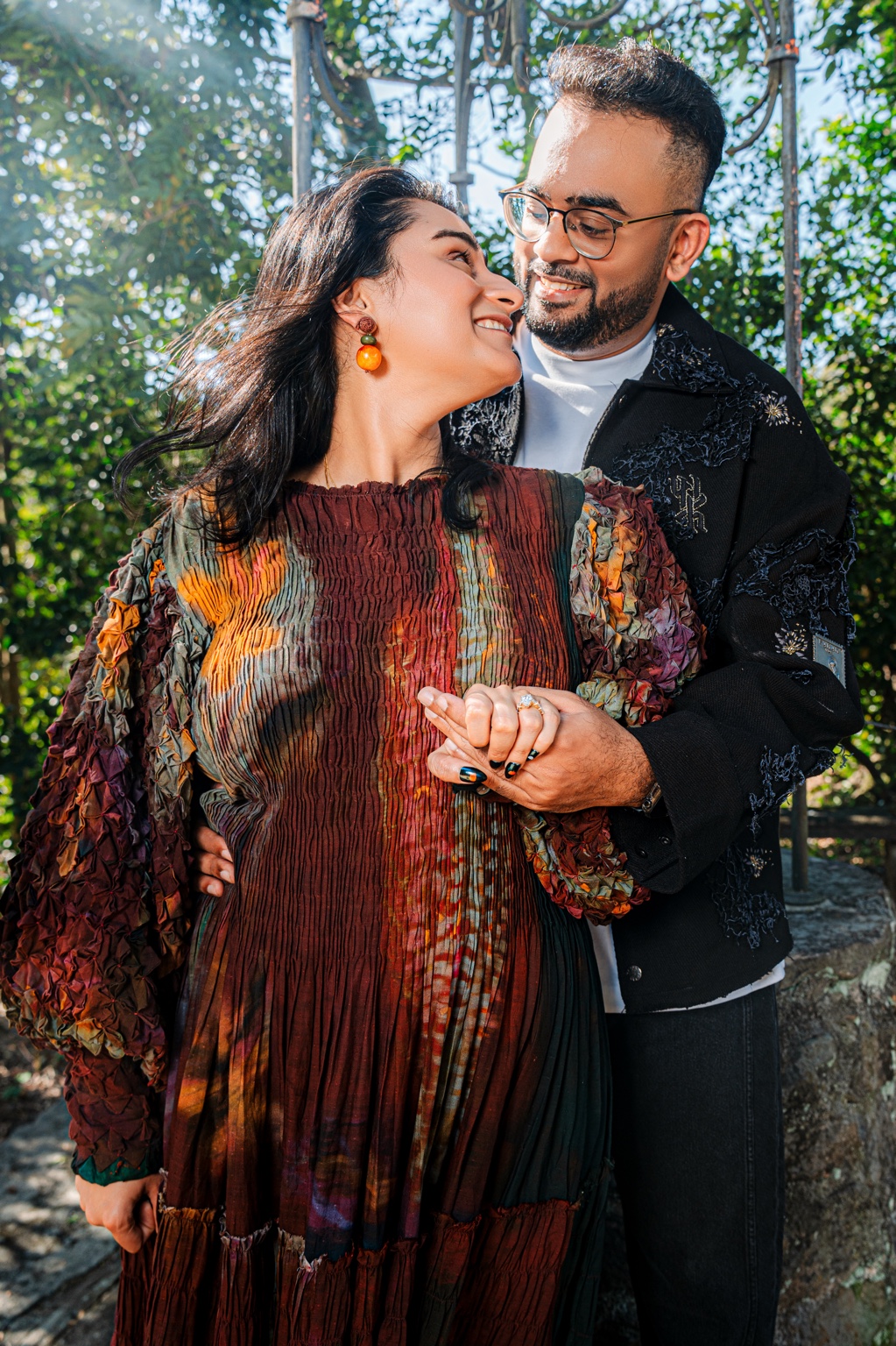
Noopur and Divyakshi’s session is a good reminder that neutral clothing is only one option. Her dress brought burgundy, teal, gold, and rich texture into the frame. His embroidered black jacket and white shirt gave those colors a strong companion; the lighter blazer created another feeling against the same dress.
I especially love the contrast between the pale estate, the reds in the dress, and the dark jacket. The photographs also change as we move from white columns to greenery. The clothing belongs to them, while the architecture and light give it different contexts.
Cedric McCray and I worked together on this session. The team’s energy helped make room for the couple’s natural laughter and playfulness. Clothes are part of the visual story, but the connection is what gives that story life. [See their full Hills & Dales engagement story](/blog/hills-and-dales-estate-engagement-photos-noopur-divyakshi).
Coordinate color, contrast, and formality
Lay both outfits on a bed or hang them side by side near a window. Look at the whole combination rather than judging each item separately. If one piece has several colors, choose one of its quieter colors for the other outfit. If both looks are simple, let texture or a single accent add interest.
Consider the background, too. A dark suit may blend into a shaded hedge; a pale outfit may sit softly against white stone. Neither is automatically wrong. Tell us whether you want separation and drama or a softer, more tonal picture so we can plan the position and lighting.
White, black, bright colors, and prints are all possible. Do not abandon something you love because of an absolute internet rule. Instead, send a photograph of the actual garments together. Align formality as well: a gown and tuxedo feel deliberate together, as do two relaxed outfits. A formal gown beside gym clothes usually needs a clear creative reason.
Choose fabric for texture, movement, and comfort
A pleated skirt can make a turn feel expressive. A structured jacket gives a portrait shape. Embroidery, knits, and textured sleeves add detail to close photographs. Shiny fabrics catch highlights differently from matte ones, so try a quick photograph in window light before deciding.
Tiny, regular checks and tightly spaced stripes deserve a camera test. Nikon explains that fine repetitive patterns can produce moiré, an interference pattern that is not actually in the fabric. That is a reason to inspect a particular garment, not to ban every checked suit or patterned dress.
Put on the complete outfit, including the undergarments you plan to wear. Check it from the front, back, and side in bright light. Sit, reach, bend, and hug your partner. If you keep pulling at a neckline, waistband, or hem, consider an adjustment or another piece. Choose the coverage and support that make you comfortable.
Plan one excellent look—or two genuinely different chapters
One strong outfit is enough for a varied session. We can change framing, light, background, movement, and distance. Two looks are useful when they serve different ideas: tailored and playful, vivid and understated, or formal architecture followed by a casual walk.
Confirm what your booked session allows before bringing a change. Travel between locations and changing clothes use photography time. As a planning example, a 90-minute session might allow 35 minutes in the first look, 10–15 minutes for a nearby change, and the remaining time for the second look and transitions. This is an example, not a package inclusion; the actual route and changing facilities determine what is realistic.
For Hills & Dales we had planned two looks for each partner. A second dress was left behind, and another engagement session is planned. Even so, the first gallery has a wide range of colors, settings, and moments. The useful takeaway: check each complete outfit before leaving, and remember that a change of clothes is not the only source of variety.
- Pack each look as a complete set: clothing, shoes, accessories, and undergarments.
- Confirm a private, permitted changing space; do not assume the venue has one.
- Start with the outfit you most want photographed if time or weather is uncertain.
- A jacket change or removable accessory can add range with less interruption.
Dress for the route as well as the portrait
An estate session may include gravel, slopes, steps, and a walk from the parking area. Carry comfortable shoes between portrait locations. If you prefer heels, bring them for suitable surfaces; a stable shoe you enjoy wearing is better than an uncomfortable one that changes the way you move.
For mountain and waterfall sessions, REI’s hiking clothing guidance emphasizes footwear with traction and clothing appropriate to changing conditions. Use practical layers for the approach and carry a portrait outfit if needed. Avoid treating a wet trail like a paved photo set.
At the beach, plan for wind and sand. Test whether an outfit stays comfortable when the breeze catches it. Bring a dry layer and a bag for sandy shoes. In a city, account for walking distance and evening temperatures. Tell us about mobility needs or clothing restrictions early so the route and photographs can work for you.
Adapt your outfit to the season and forecast
Check the forecast for the exact location close to the session, then discuss any meaningful change with us. A calendar season alone does not tell you how a shaded garden, windy shoreline, or mountain overlook will feel.
| Conditions | What to consider |
|---|---|
| Warm or humid | Lightweight garments you have tested for comfort; water, blotting tissues, and an optional fresh shirt. Keep heavy layers for shorter portrait sequences. |
| Cool or windy | A coat, knit, or jacket that complements the outfit, plus warm layers between photographs. Test how a hem or scarf moves in wind. |
| Rain or waterfall spray | A practical outer layer and dry change. Keep delicate or irreplaceable garments out of conditions they cannot tolerate. |
| Strong sunlight | Check pale or sheer fabrics in bright light. Bring shade and sun protection for travel and waiting; we will plan the portrait light. |
Accessories, grooming, and the details you notice later
Choose accessories that feel personal: a favorite watch, meaningful jewelry, a hat, or a distinctive pair of shoes. You do not need all of them in every picture. A hat can create one playful chapter and then come off for closer portraits.
Keep your usual glasses if they are part of how you see yourself; we can work with angle and light. Hair and makeup are personal choices, not requirements. If booking a service, allow a buffer before the session and choose a look you have tried or discussed beforehand.
Follow garment care labels when cleaning, pressing, or steaming. Check shoe soles, lint, loose threads, visible tags, and bulky pockets. Clean the ring using care advice appropriate to its stone and setting rather than an unfamiliar last-minute treatment. Check hands if close ring photographs matter to you; a manicure is optional.
Your preparation and packing checklist
A few days before the session, send us photographs of both complete looks, your mood references, and any must-have details. Tell us which outfit matters most and whether you want lots of movement or a quieter portrait approach.
- Try both looks on together, including shoes and undergarments.
- Check closures, fit, hems, and movement; photograph the outfits in daylight.
- Confirm location, weather plan, walking distance, changing arrangements, and arrival time.
- Pack labeled garment bags, shoes, jewelry, and any needed layers the evening before.
- Bring water, a lint roller, a small touch-up kit, and comfortable walking shoes.
- Before leaving, physically check that every garment bag and accessory bag is in the car.
- Arrive dressed in the first look unless another arrangement is confirmed.
Questions couples ask about engagement outfits
Do we have to wear white? No. White can be lovely, but the session is yours. Color, black, tailored separates, cultural attire, or a favorite casual look are all valid starting points.
Do we need to buy new clothes? No. Start with pieces you already feel good in. Borrowing, renting, or making a small tailoring adjustment can be options if useful; none is necessary for a strong photograph.
Can both of us wear patterns? Yes, if the combination feels intentional. Compare scale and color together and send us a test photograph. If the frame feels busy, simplify one element rather than discarding both outfits.
Should we match our wedding colors? Only if you want to. If these pictures will be used on save-the-dates or displayed at the wedding, a related palette can connect the designs. It is not a requirement.
What if we feel awkward dressed up? Choose a level of polish you enjoy. We can begin with walking and conversation so the photographs grow from your connection rather than a rigid pose.
Plan your engagement session with Square Atom
Bring us your location ideas, favorite outfits, and the feeling you want from the photographs. We can discuss how the wardrobe, setting, light, and available session time fit together before you arrive.
[Explore engagement photography](/engagement-photographer), [send an inquiry](/inquire), or schedule a consultation. Include your preferred date, location, and whether you are imagining one look or two. We will confirm the scope and logistics for your session.
Research and photo credits
The mood boards, outfit examples, and session planning suggestions above are Square Atom’s editorial recommendations. Technical and outdoor references: Nikon: Moiré & False Color and REI: What to Wear Hiking. Additional styling perspective: Brides: What to Wear to Your Engagement Photos, featuring photographer interviews about personal style, texture, and coordination. Reviewed November 4, 2026.
Photo examples come from Square Atom’s engagement, proposal, and celebration portfolio. Sam & Jas’s Ontario contact sheet is identified as bridal-shower inspiration. Hills & Dales session photography team: Elijah Holyfield of Square Atom Films & Photography and Cedric McCray of PTP357 Studio. Follow Cedric on Instagram @ptp357studio. [Explore more sessions and mood palettes in our portfolio](/portfolio).